
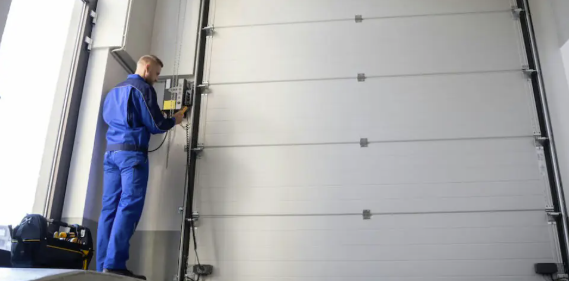
Ask an entrepreneur to list the physical assets keeping a home-based business running and you’ll hear about the desk setup, the Wi-Fi router, maybe the ergonomic chair. The garage door almost never comes up. It should.
If you run a business from a home office, store inventory in the garage, or load a work vehicle before dawn, that door is daily operating infrastructure. When it fails, the cost isn’t only the repair bill. It’s missed appointments, a blocked vehicle, and a security gap in what you thought was a locked building.
So what does a business-minded homeowner actually need to know about it?
The Category Is Bigger Than It Looks
Garage doors sit inside a surprisingly large industry. One market analysis puts the global garage and overhead doors market at USD 6.82 billion in 2025, on track to reach USD 8.78 billion by 2030 at a 5.18% CAGR. The service side of that industry, the technicians who install and repair, is on a similar trajectory.
Why does that matter to a founder? Because it means you’re shopping in a mature, well-supplied service category with real competition for your business. You can push on price, warranty, and response time in ways you can’t with, say, a specialty HVAC repair.
Safety Rules Exist for a Reason
A modern residential garage door is one of the heaviest moving objects in an average home. Regulators figured that out the hard way. The federal safety standard for automatic residential garage door operators was first issued in 1991 under the Consumer Product Safety Improvement Act of 1990, and it’s been refined since.
If your opener predates auto-reverse sensors, or the photo-eyes at the base of the tracks are misaligned, you’re operating outside the standard the rest of the industry has been built around for decades. That’s a liability worth fixing before it becomes a story.
What Actually Deserves Your Attention
A garage door is a system, not a slab. A handful of components carry most of the risk and most of the value:
- Springs. Torsion springs are rated for a finite number of open-close cycles. When they go, the door won’t lift, and the failure is sudden. Track the age, not the appearance.
- Opener and backup power. A dead opener during a power outage means a stuck vehicle. Battery backups are already required on new installs in some states and are a smart upgrade anywhere the weather is unpredictable.
- Insulation. If the garage shares a wall with a home office or doubles as a workshop, an insulated door meaningfully changes the temperature you’re working in and the energy bill you’re paying.
- Smart controls. Remote monitoring turns the door into a checkable asset. You’ll know if a delivery driver left it open, and you can close it from a client site.
Treat It Like a Vendor Relationship
The best move most home-based operators can make is to stop treating the garage door as a one-off emergency and start treating it like any other vendor relationship. Get on an annual maintenance cadence, keep a record of parts and dates, and know who you’ll call at 6 a.m. when the door refuses to open on a delivery morning.
A local, family-run outfit like Ohana Garage Door Repair is the kind of provider worth lining up before you need one, not after.
Entrepreneurs are wired to find an edge in unglamorous places. This is one of them. A door that opens quickly, closes securely, and doesn’t surprise you on a Monday morning is a small operational win that compounds every week you don’t have to think about it.
