
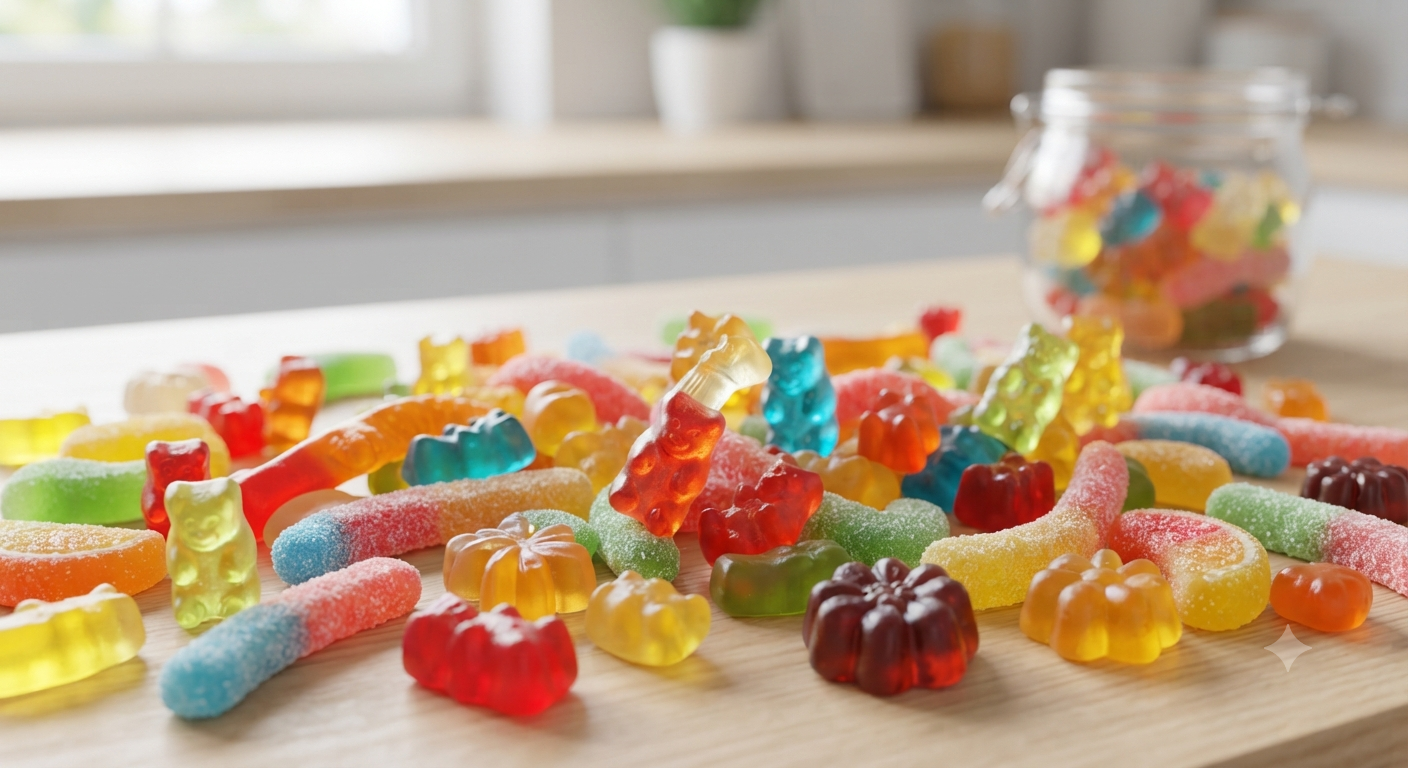
Gomitas are, arguably, one of the most universal and beloved treats across the globe. From those iconic colorful bears that defined our childhoods to the sophisticated, functional versions we see today, gomitas have managed to remain relevant for over a century. But what exactly is it that makes them so irresistible?
In this article, we will explore the universe of gomitas in depth, breaking down their historical origin, the technical secrets behind their industrial production, the different types that exist in the market, and the health considerations that every informed consumer should keep in mind.
A Bit of History: From Medicine Cabinet to Confectionery
The origin of gomitas is not as sweet as their final flavor. In the mid-19th century in Germany, pharmacists sought innovative ways to make medications—often bitter or difficult to swallow—more palatable for patients. The solution was to encapsulate flavors within a gelatinous matrix, giving rise to the first chewy morsels.
However, the real leap to fame occurred in the 1920s. Hans Riegel, a worker at a German confectionery, decided to strike out on his own by founding the company Haribo. Inspired by the dancing bear shows at European festivals, he created the famous “Gummy Bears.” Their success was so overwhelming that it transformed these small figures into a massive cultural phenomenon.
What Are Gomitas Actually Made Of?
The elastic, chewy texture that defines gomitas is no accident; it is the result of precise chemistry. While recipes vary by manufacturer, the fundamental components are almost always the same.
The Key Ingredients
-
Gelatin (Grenetina): This is the pillar of the structure. Obtained from animal collagen, it is responsible for that firm yet elastic texture.
-
Sweeteners: Sugar, glucose syrup, or fructose syrup provide the necessary sweetness and help prevent the mixture from crystallizing.
-
Flavoring and Coloring Agents: These allow for the wide range of fruity flavors and vibrant colors we all know.
-
Acids: Citric acid is often added to provide that tart kick, especially in “sour” versions.
For those seeking alternatives, modern gomitas also use pectin (derived from fruits) or agar-agar (obtained from seaweed) to create vegan versions, allowing everyone to enjoy this delight without sacrificing the sensory experience.
The Industrial Process: Science in Motion
The large-scale manufacturing of gomitas is a fascinating process that combines precision engineering with culinary art. It all starts with preparing the mixture, where ingredients are cooked at high temperatures to achieve a homogeneous solution.
Once the mixture is ready, “depositor” machines are used to dispense the hot liquid into starch or silicone molds. These molds define the final shape of the gomitas. After a cooling and resting period, the pieces are extracted, coated in wax (to give them shine and prevent sticking), and are ready for packaging.
Varieties: More Than Just Bears
The gomitas market has evolved dramatically. Today, we are no longer limited to basic flavors.
-
Classic Gomitas: These are the traditional bears, worms, and fruit slices we all recognize.
-
Sour Gomitas: Coated with a layer of citric acid crystals and sugar that offer an initial burst of tart flavor.
-
Gourmet Gomitas: These stand out for using natural fruit juices, botanical extracts, and much more complex shapes.
-
Functional Gomitas: A growing trend where vitamins, minerals, collagen, or even adaptogens are added, turning the treat into a nutritional supplement.
Health and Responsible Consumption
It is impossible to talk about gomitas without mentioning health. As a confectionery product, their consumption should be moderate. High sugar content can contribute to issues like dental cavities or unnecessary caloric excess.
For parents, it is crucial to monitor the intake of little ones, given that these sweets do not possess significant nutritional value and often contain additives that are not recommended in large amounts. The key, as with everything in life, is balance: enjoy them as an occasional treat rather than a staple of your daily diet.
The Future of Gomitas
The industry does not stand still. We are seeing a transition toward cleaner labels, eliminating artificial dyes in favor of plant-based extracts. Likewise, packaging innovation seeks to reduce environmental impact, while production technology allows for the creation of gomitas with customized textures, ranging from very soft to highly resilient.
Gomitas are a testament to how innovation and the human desire for culinary pleasure can create products that transcend generations. Whether you prefer them classic, sour, or loaded with vitamins, these small pieces of happiness continue to win over palates everywhere.
Frequently Asked Questions (FAQ)
1. Why do gomitas tend to stick together? Humidity and heat are the enemies of gomitas. To prevent them from sticking, manufacturers usually apply a thin layer of carnauba wax or vegetable oils after the cooling process.
2. Do gomitas have an expiration date? Yes. Although they are shelf-stable due to their high sugar content and low moisture, they can lose their elastic texture and become hard over time. It is best to consume them within the period recommended on the packaging.
3. How can I tell if a gomita is high quality? A good gomita should have a uniform, elastic texture. If it breaks easily when stretched or is excessively sticky to the touch, it could indicate an inadequate drying process or excess moisture.
4. Are there options for people with dietary restrictions? Absolutely! Thanks to consumer demand, it is easy today to find gomitas without sugar (using polyols or stevia) and vegan gomitas that replace gelatin with pectin or agar-agar, making them entirely free of animal products.
5. Is it safe to eat functional gomitas daily? While gomitas with vitamins can be an easy way to supplement your diet, you should always consult with a healthcare professional. They should never replace a balanced diet, and since they contain sugar, excessive consumption of these “vitamins” can be counterproductive.
