
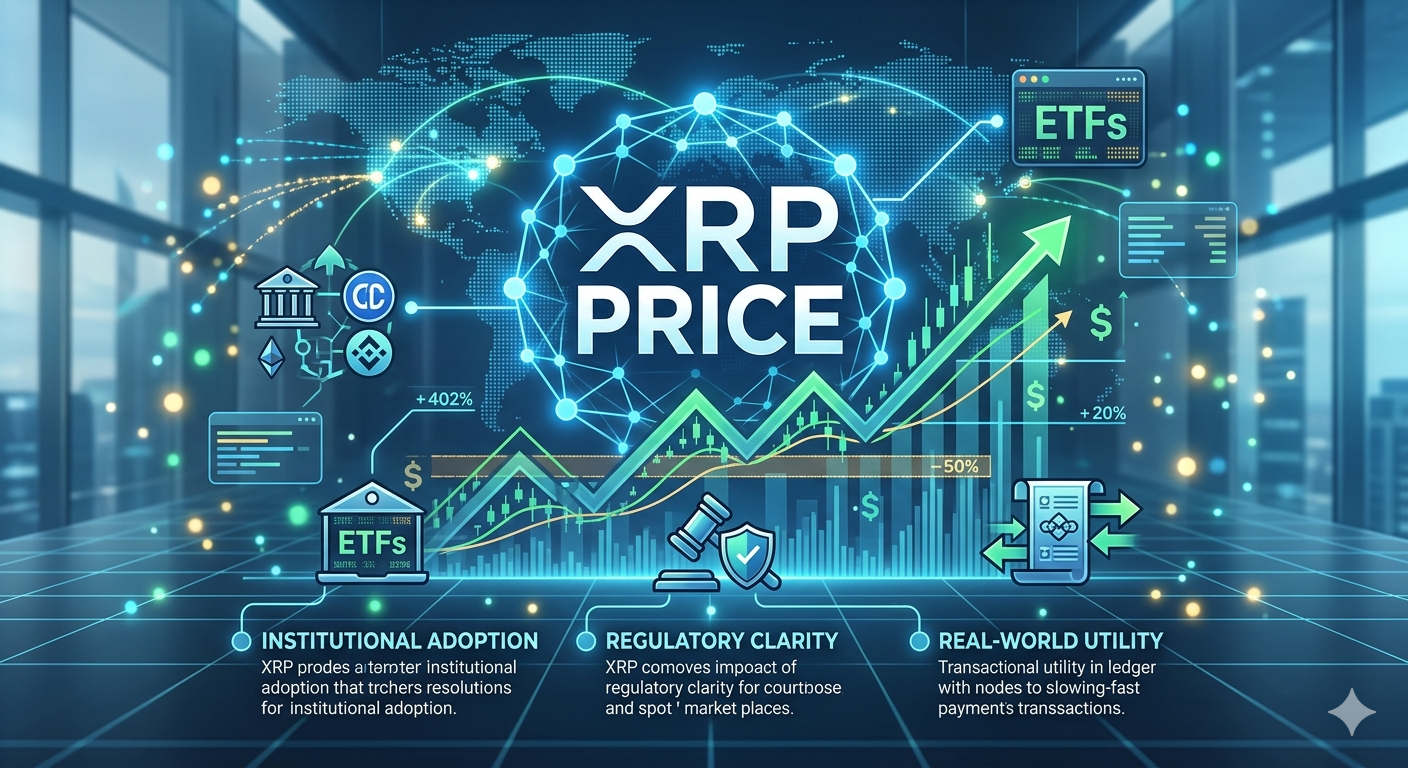
The digital asset landscape is notoriously fast-paced, and few cryptocurrencies capture the market’s attention quite like Ripple’s native token. For investors and market spectators alike, tracking the xrp price has become a daily ritual. As one of the oldest and most liquid digital currencies in existence, its valuation serves as a critical barometer for the broader enterprise blockchain sector.
Understanding what drives the xrp price requires looking beyond standard retail market sentiment. Unlike meme tokens or highly speculative experimental protocols, this digital asset is fundamentally tied to international banking infrastructure, institutional liquidity, and evolving cross-border payment networks.
Whether you are an active day trader, a long-term holder, or a financial analyst, keeping a close eye on the shifts in the market value of Ripple’s native asset is essential. This comprehensive analysis breaks down the core elements influencing its valuation, historical context, and the regulatory catalysts shaping its future.
Technical Analysis and Current Market Dynamics
Market charts offer a fascinating, data-driven window into buyer and seller behavior. When evaluating the xrp price, technical analysts frequently look at macro patterns that span across weeks or months to identify true support and resistance levels.
       [Major Resistance Zone: $1.50 - $1.55]
                        ▲
                        │  (Breakout Attempt)
                        │
   ═════════════════════╧═════════════════════
     Current Consolidation Range: $1.35 - $1.45
   ═════════════════════╤═════════════════════
                        │
                        │  (Strong Buying Floor)
                        ▼
         [Major Support Zone: $1.10 - $1.15]
The token has shown significant consolidation, forming classic technical structures like cup-and-handle formations on longer timeframes. Traders closely watch specific price zones to determine the next major directional trend:
-
The Crucial Floor: A solid accumulation zone sits between the $1.10 and $1.15 range, providing historical safety during broader market pullbacks.
-
The Mid-Range Battleground: The asset frequently hovers inside a tight bracket between $1.35 and $1.45, reflecting a balanced tug-of-war between buyers and sellers.
-
The Resistance Ceiling: The immediate hurdle sits stubbornly at $1.50 to $1.55. Breaking cleanly above this level with heavy volume has historically opened the door for rapid upside momentum.
Momentum indicators such as the Relative Strength Index (RSI) and the Moving Average Convergence Divergence (MACD) remain vital tools. When these metrics align alongside heavy institutional trading volume, the xrp price typically moves out of its consolidation phases quickly.
Core Factors Influencing the XRP Price
No single variable determines the value of a major digital currency. Instead, the xrp price is the product of several interconnected macroeconomic, legal, and operational forces.
1. Institutional Adoption and Global Partnerships
The primary utility of the XRP Ledger (XRPL) is to facilitate near-instantaneous, low-cost cross-border payments. Consequently, every time a global bank, remittance provider, or financial institution integrates Ripple’s payment solutions, it directly impacts the underlying asset’s utility. Massive real-time redemption pilots involving tokenized bonds and major payment networks showcase the asset’s expanding footprint in traditional finance.
2. The Dawn of Spot ETFs and Asset Inflows
The introduction of spot exchange-traded funds (ETFs) in the United States completely changed the game for institutional exposure. Instead of navigating complex crypto exchanges, traditional hedge funds and retail retirement accounts can buy into the asset via traditional stock brokerages. Inflows into these spot funds remove millions of tokens from active market circulation, fundamentally altering the supply-and-demand mechanics that dictate the daily xrp price.
3. Supply Dynamics and Escrow Releases
Unlike Bitcoin, which relies on continuous computational mining, the total supply of XRP is pre-mined. Ripple holds a significant portion of the total supply locked securely in a series of programmatic escrows. Each month, a portion of these tokens is unlocked to support business operations and ecosystem development, with the remainder systematically relocked. This transparent supply schedule prevents unexpected market dilution and offers predictable parameters for long-term valuation models.
4. Broader Crypto Market Sentiment
Even the most utility-driven altcoins cannot entirely escape the gravity of the wider market. If Bitcoin experiences sharp volatility or macroeconomic factors hit global equity markets, the xrp price will naturally feel the ripple effects. Liquidations on derivative exchanges can cause brief, sharp price fluctuations that deviate momentarily from the token’s underlying organic demand.
The Legal Turning Point: Post-SEC Regulatory Clarity
You cannot truly analyze the historical journey of the xrp price without discussing the massive regulatory clouds that hovered over it for nearly half a decade. The long-running civil lawsuit between Ripple Labs and the U.S. Securities and Exchange Commission (SEC) cast a shadow of uncertainty that kept risk-averse institutional capital on the sidelines.
The definitive resolution of this case established a massive legal precedent for the entire digital asset industry. The federal court ruled unequivocally that public, programmatic sales of the token on retail exchanges do not constitute securities transactions. While specific past institutional sales were subjected to civil penalties, the core classification of the token itself was firmly secured.
Legal Milestone Achievement: With the unconditional withdrawal of all remaining legal appeals, the asset achieved an elite level of regulatory clarity shared by only a select few digital assets globally.
This absolute resolution cleared away the legal ambiguity that previously discouraged major enterprise entities. Furthermore, proactive legislative developments like the CLARITY Act have moved through legislative branches to cement digital commodities into federal law. This ongoing legislative progress provides the predictable legal framework that multi-billion-dollar financial institutions require before committing deep capital pools to the XRPL ecosystem.
Real-World Utility Driving Value
Unlike assets that rely purely on social media hype, the long-term stabilization and growth of the xrp price are heavily tied to concrete, real-world utility. The architecture of the XRP Ledger was purpose-built to address structural friction inside the global financial system.
| Financial Pain Point | Traditional System Solution | XRP Ledger Alternative |
| Transaction Speed | 3 to 5 business days via legacy systems | Fully settled in 3 to 5 seconds |
| Transaction Costs | High intermediate fees and hidden fx markups | Fractions of a single penny per transfer |
| Pre-Funding Needs | Nostro/Vostro accounts holding idle capital | On-Demand Liquidity utilizing native assets |
| Energy Consumption | Proof-of-Work systems requiring heavy power grids | Inherently eco-friendly consensus mechanism |
This underlying utility ensures a steady stream of transactional activity that is independent of retail trading speculation. As central banks explore Central Bank Digital Currencies (CBDCs) and financial institutions roll out proprietary stablecoins—such as Ripple’s own RLUSD protocol—the underlying ledger acts as a neutral, high-speed bridge asset to swap between disparate currencies seamlessly.
Strategic Outlook and Long-Term Projections
As we look toward the future, financial analysts and major banking institutions have begun releasing highly optimistic long-term models regarding where the token’s value could head.
Major institutional firms, including Standard Chartered, have published projections suggesting that structural changes—such as steady spot ETF inflows and accelerating commercial payment integrations—could propel the asset toward targets like $8.00 over the coming years. Other industry analytics platforms maintain conservative base cases ranging between $5.00 and $6.00, while aggressive decade-long models suggest even higher double-digit potential if the asset captures a modest single-digit percentage of the global cross-border swift settlement market.
While these projections highlight immense structural potential, smart market participants know that digital assets remain inherently volatile. The xrp price will always be subject to short-term market corrections, macroeconomic shifts, and evolving competitive landscapes. Diversification, careful risk management, and rigorous personal research remain mandatory strategies for navigating this evolving landscape successfully.
Conclusion: The Path Ahead for XRP
The narrative surrounding the xrp price has fundamentally shifted from one dominated by legal survival to one driven by institutional adoption, legislative progress, and real-world payment utility. By stripping away regulatory ambiguity and securing solid paths to institutional capital through spot ETFs, the asset has firmly positioned itself as a structural pillar of the modern financial evolution.
For anyone tracking the market, observing how the token interacts with major technical resistance zones and institutional integration milestones will provide vital clues for its macroeconomic trajectory. The digital asset ecosystem is maturing rapidly, and this enterprise-focused token remains at the absolute forefront of that transformation.
Frequently Asked Questions (FAQs)
1. What is the primary factor that drives the daily XRP price?
The daily price is primarily driven by open market supply and demand dynamics across global digital asset exchanges. This demand is influenced by spot ETF inflows, cross-border transactional volume via Ripple’s payment networks, macroeconomic shifts, and overall sentiment across the broader cryptocurrency market.
2. How did the SEC lawsuit settlement impact the asset’s market value?
The conclusion of the SEC lawsuit provided absolute regulatory clarity, confirming that retail sales of the token are not classified as securities. This resolution eliminated the legal risk that had historically kept major institutional investors, global banks, and traditional asset managers from accumulating or utilizing the asset.
3. How do monthly escrow releases affect the overall supply?
Ripple locks a large portion of its tokens in a secure, programmatic escrow system. Each month, one billion tokens are unlocked to provide predictable liquidity for corporate operations and ecosystem grants. The vast majority of unused tokens are immediately relocked back into the escrow system, which prevents sudden supply shocks or market dilution.
4. Can XRP be used for purposes other than cross-border banking payments?
Yes. While cross-border settlement is its flagship enterprise use case, the XRP Ledger is a decentralized, open-source Layer-1 blockchain. It natively supports smart contracts, decentralized applications (dApps), non-fungible tokens (NFTs), stablecoin issuance (such as RLUSD), and tokenized real-world assets (RWAs).
5. What role do spot ETFs play in the token’s long-term price outlook?
Spot ETFs provide a heavily regulated, frictionless pipeline for institutional capital to flow directly into the asset. As asset management firms buy up physical tokens to back their fund shares, a significant percentage of the circulating supply is effectively taken out of open market circulation, creating a long-term supply squeeze if organic demand continues to rise.
