
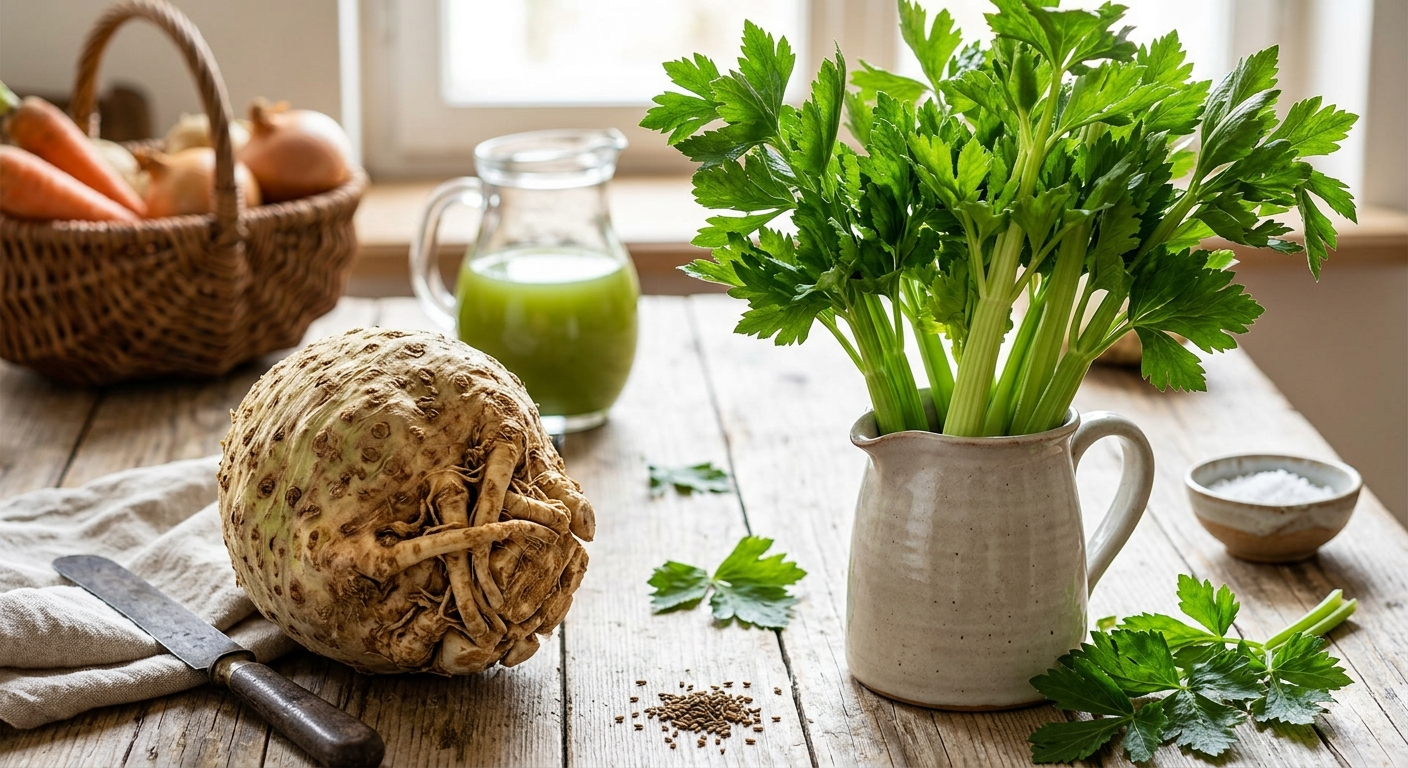
When you walk into a modern supermarket, the produce section usually greets you with perfectly washed, pale, and uniform stalks wrapped tightly in plastic. However, experienced chefs and traditional home cooks know that this isn’t what is truly meant by the term pravi celer. In traditional culinary arts and folk medicine, pravi celer (Apium graveolens) represents something much deeper, older, and more complete than a simple, watery snack. It is an indigenous, highly aromatic biennial plant from the Apiaceae family that has been used for centuries as both a culinary foundation and a natural remedy for purifying the body.
The botanical name originates from the Latin word celeri, which translates to “swift acting”—a perfect description of its rapid and potent impact on human health. While the Western world often recognizes only the crunchy green stalks, traditional European cultures treat this plant as a holistic treasure. Every single part of pravi celer is utilized: from the robust, gnarled root packed with earthy aromas, to the ribbed stalks, and all the way to the deep green, glossy leaves and tiny medicinal seeds. In this comprehensive guide, we explore all facets of this fascinating plant, its three main variations, its nutritional profile, and how you can harness it for maximum health.
Botany and Origins: How a Wild Plant Conquered the World
The history of this plant dates back more than three thousand years, deep into the marshy, coastal wetlands of the Mediterranean where it originally grew as a wild, bitter, and halophytic species. In antiquity, the ancient Greeks and Romans did not use pravi celer for everyday cooking; instead, they viewed it as a symbol of beauty, celebration, and even mourning. Wreaths made from woven leaves crowned the victors of the Isthmian Games, yet they were also placed in tombs as tributes to the deceased—traces of this wild herb have even been discovered in the tombs of Egyptian pharaohs, including Tutankhamun.
The cultivation and transformation of this wild herb into the sweet, crisp pravi celer we know today began during the 16th and 17th centuries in Italy and France. Through careful selection and breeding, agriculturalists subdued its harsh bitterness, instead developing varieties rich in juicy flesh and delicate essential oils. French gastronomes became so enamored with its complex flavor that an old proverb arose: “One should not fear the arduous road to Rome for the sake of love and celery.” Today, the plant is an indispensable pillar of global agriculture, requiring nutrient-rich, moist soil and a great deal of patience to grow.
The Three Faces of One Plant: Which Varieties Make Up Pravi celer?
From a botanical perspective, the umbrella term pravi celer encompasses three distinct cultivated varieties. Each possesses specific anatomical traits and unique applications in the kitchen:
1. The Root Variety (Celeriac) – Apium graveolens var. rapaceum
This variety is the undisputed king of traditional soups, stews, and broths. It is easily recognized by its large, gnarled, and irregular underground hypocotyl (bulb) which can weigh up to a kilogram. Its interior flesh is firm, creamy-white, and carries an intensely concentrated, earthy aroma. When shopping for this component of pravi celer, uways choose smaller, heavier bulbs, as overly large ones tend to become spongy and hollow in the center.
2. The Stalk Variety (Pascal) – Apium graveolens var. dulce
This variety was selectively bred for its long, thick, and succulent leaf stalks. The stems are bright green, ribbed, and have a highly crisp, fibrous structure. It features a much milder, sweeter, and more refreshing taste compared to the root, making it the ideal candidate for raw consumption, salads, or as the star ingredient in fresh morning juices.
3. The Leaf Variety (Cutting) – Apium graveolens var. secalinum
This variation does not develop a large bulbous root or thick, meaty stalks. Instead, it directs all its biological energy into producing a lush canopy of dark green, serrated foliage. The leaves are incredibly rich in essential oils, carrying a sharp, peppery, and highly robust flavor profile. It serves as an exceptional fresh herb or can be dried and frozen for winter spice blends.
Nutritional Profile: Low Calories, Immense Vitality
One of the primary reasons pravi celer has earned global superfood status within the modern nutritional community is its incredible ratio of minimal caloric content to vast micronutrient density. Clocking in at a mere 14 to 16 calories per 100 grams, it is a premier dietary choice for weight management and metabolic detoxification.
Let us look at a detailed breakdown of what you provide your body with every 100 grams of raw pravi celer:
| Nutrient | Amount per 100g | Percentage of Recommended Daily Allowance (RDA) |
| Water | 95.4 g | / |
| Carbohydrates | 2.97 g | 1% |
| Dietary Fiber | 1.6 g | 6% |
| Proteins | 0.69 g | 1% |
| Vitamin K | 29.3 µg | 29% |
| Potassium | 344 mg | 10% |
| Sodium | 132 mg | 5% |
| Vitamin C | 7 mg | 9% |
In addition to these elements, pravi celer contains a well-rounded spectrum of B-complex vitamins (B1, B2, B6) essential for cellular energy, alongside bioavailable forms of calcium, magnesium, iron, and phosphorus.
Therapeutic Properties: Why Pravi celer Acts as an Internal Cleanser
Herbal medicine has long referred to this plant as an internal broom for the human body. The therapeutic benefits of pravi celer have been, validated by numerous contemporary pharmacological studies, showing noticeable effects soon after introducing it into a daily routine.
-
A Potent Natural Diuretic: Due to its high potassium-to-sodium ratio and specific volatile oils, pravi celer stimulates the kidneys and accelerates the elimination of excess fluids and metabolic waste. This action directly aids in the prevention and dissolution of uric acid crystals and kidney stones.
-
Blood Pressure Regulation: It contains active phytochemicals known as phthalides. Phthalides relax the smooth muscle tissues within the arterial walls, allowing blood vessels to dilate. This leads to smoother, unrestricted blood flow and a natural reduction in hypertension.
-
Stress Hormone Reduction: These same phthalides have been, shown to reduce the secretion of catecholamines (stress hormones), which gently soothes the nervous system, eases anxiety, and combats insomnia.
-
Combating Inflammation and Gout: The extracts and seeds of pravi celer contain over 20 distinct anti-inflammatory compounds. In traditional holistic medicine, its seed tea is a recognized remedy for gout, rheumatism, and rheumatoid arthritis because it targets and lowers systemic uric acid levels.
-
The Aphrodisiac Myth: For centuries, folklore claimed this plant could boost libido. Modern science revealed that it contains androstenone and androstenol—natural pheromones. When chewing it, these volatile compounds release into the oral cavity and travel nasally, subtly boosting alertness and vitality.
Important Advisory for Pregnant Women and Kidney Patients: While exceptionally healthy, pravi celer in therapeutic, highly concentrated quantities (such as pure, undiluted juicing protocols) contains apiol, which can stimulate uterine contractions and should be avoided during pregnancy. Furthermore, individuals with acute or severe kidney infections should exercise caution, as the heavy diuretic stimulation can overwork compromised kidneys.
Pravi celer in the Kitchen: Preparation and Preservation Strategies
One of the greatest culinary advantages of this vegetable is its structural resilience. Unlike many delicate greens, pravi celer is one of the rare plants whose antioxidant properties do not degrade heavily during thermal processing. Its heat-stable polyphenols remain biologically active even after being simmered for hours in a stockpot.
Selection and Storage Mastery
When buying the stalk variety, look for specimens that are firm, rigid, and snap cleanly when bent—if a stalk bends pliably without snapping, it has lost its moisture and vitality. Avoid purchasing pre-cut, pre-washed, or plastic-packaged sticks whenever possible, as open cell walls accelerate oxidation and cause rapid vitamin loss.
-
Refrigeration Technique: Wash the stalks, dry them thoroughly, and wrap them tightly in aluminum foil. This simple trick keeps them crisp for up to two full weeks by allowing natural ripening gases to escape while maintaining moisture. Keep the root unpeeled in a paper bag within the crisper drawer.
-
Preventing Oxidation: The moment you peel or cut the root of pravi celer, it reacts with oxygen, turning a dull, gray-brown color. To prevent this enzymatic browning, submerge the sliced root immediately into a bowl of cold water mixed with a squeeze of fresh lemon juice or a splash of vinegar.
Exquisite Culinary Pairings
Cooked root yields a velvety, mildly sweet, and deeply comforting profile. Try mashing it fifty-fifty with standard potatoes to create a lighter, low-carb puree with gourmet aromatic flair, or grate it raw alongside crisp apples and carrots for a vibrant, enzymatic winter slaw. The leafy tops are the ultimate finish for any homemade broth, while the raw stalks pair beautifully with artisanal blue cheeses, toasted walnuts, and roasted poultry.
Conclusion: Reclaiming the Authentic Flavor of Whole Food
In an era dominated by fast food and synthetic flavor enhancers, pravi celer invites us to return to our culinary roots—both literally and figuratively. It is far more than a simple green garnish or a fleeting fitness trend; it is a time-tested, powerful ally for human health that purifies the bloodstream, lightens the load on the cardiovascular system, and grounds our meals with irreplaceable character. The next time you visit a local market, bypass the powdered seasoning packets. Reach instead for the whole, heavy, fragrant root and the robust green stalks, and let this ancient plant do what it does best: swiftly and surely revitalize your well-being.
Frequently Asked Questions (FAQs)
1. What is the difference between the stalk variety and the root variety of pravi celer?
While they belong to the same species (Apium graveolens), they are different cultivated varieties of pravi celer. The stalk variety (Pascal) is, bred specifically for its thick, succulent, above-ground stems and mild flavor. The root variety (celeriac) is, bred for its large, nutrient-dense underground bulb. Both share similar medicinal qualities, but the root offers a much denser, earthier taste profile suited for cooking, while the stalk excels in raw or juiced formats.
2. Why is pure juice from pravi celer so popular, and what is the best way to consume it?
Juice made from pravi celer gained global traction due to its highly efficient alkalizing and detoxifying effects on the digestive system. To get the maximum therapeutic benefit, it is, best consumed entirely pure—without pulp, water, or added ice—drinking roughly 400 ml first thing in the morning on an empty stomach. Wait 15 to 30 minutes before consuming breakfast to let the plant’s cluster salts cleanse the gut lining.
3. Are the leaves of pravi celer safe to eat, and how should they be used?
Absolutely. The leaves are entirely edible and actually boast a significantly higher concentration of Vitamin C, calcium, and volatile antioxidants than the stalks. Because their flavor is quite bold and slightly peppery, they should be, treated as a fresh herb rather than a salad green. Finely chop them into soups, sauces, and marinades at the very end of cooking, or dry them out to make an artisanal seasoned salt.
4. Does pravi celer genuinely possess “negative calories”?
The concept of “negative calories” is a popular dietary simplification, but it holds some practical truth. Because pravi celer consists of over 95% water bound by complex structural cellulose, the caloric cost of chewing, digesting, and excreting it nearly equals the tiny amount of caloric energy the vegetable provides. It is one of the absolute best tools for healthy weight management because it provides physical satiety and hydration without a caloric surplus.
5. Who needs to exercise caution when consuming pravi celer?
This plant contains active compounds called psoralens, which can increase skin sensitivity to UV light if consumed in extreme excess. More importantly, pregnant women should avoid medicinal amounts of pravi celer or its seed extracts due to uterine-stimulating compounds. Lastly, it is classified as a notable allergen; its allergenic proteins are highly heat-resistant, meaning individuals with a known allergy must strictly avoid it in both raw and cooked dishes to prevent allergic reactions.
