
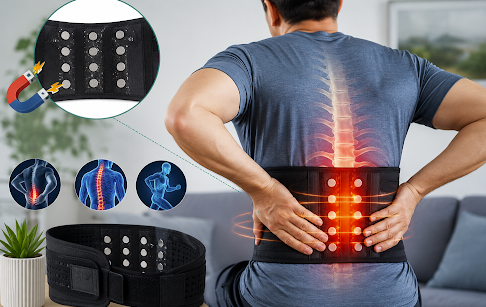
Back pain rarely waits for a convenient time. It can make tying your shoes frustrating, turn a short drive into a challenge, or leave you counting the minutes until you can sit down again. It’s no surprise that many people look for natural ways to stay comfortable, including a magnetic belt for back pain. But does it actually help?
The answer requires a balanced look at the evidence. While magnetic therapy has attracted interest for years, research has not reached the same conclusion as many marketing claims. Here’s what you should know before deciding if it’s right for you.
What Is a Magnetic Belt for Back Pain?
A magnetic belt is a wearable support designed to wrap around the lower back. It typically combines lumbar compression with strategically placed static magnets. Many designs also use breathable fabrics and adjustable straps, making them suitable for daily wear.
People often choose these belts because they want a drug free option that may complement their existing back care routine.
What Does the Evidence Say?
Research into static magnetic therapy has produced mixed findings.
Several high quality reviews have found no consistent evidence that static magnets alone provide reliable relief for chronic low back pain. For this reason, magnetic therapy is not recommended as a primary treatment in major clinical guidelines for low back pain.
However, this doesn’t mean every user has the same experience.
Many people report feeling more supported while wearing a magnetic belt. In some cases, that improved comfort may come from the belt’s compression, gentle support, warmth, or simply feeling more confident during movement. Individual experiences can vary, and current research cannot confirm that the magnets themselves are responsible for pain relief.
When Might a Magnetic Belt Be Worth Considering?
A magnetic belt for back pain may suit people who want to include supportive wellness products alongside healthy lifestyle habits.
It may be useful if you:
- Want gentle lower back support during everyday activities.
- Prefer natural, non invasive wellness products.
- Need a comfortable belt while walking or doing light household tasks.
- Understand that it is a supportive aid rather than a medical treatment.
Having realistic expectations is important. A magnetic belt should complement, not replace, evidence based care.
Supporting Your Back Every Day
Long term back health usually depends on several habits working together.
You can often improve comfort by:
- Staying active with regular low impact exercise.
- Stretching to maintain flexibility.
- Using proper lifting techniques.
- Maintaining good posture throughout the day.
- Seeking professional advice if pain is severe, persistent, or accompanied by numbness, weakness, or other concerning symptoms.
These approaches have stronger scientific support than relying on any single wellness product.
Choosing a Quality Magnetic Belt
If you’re considering buying one, focus on comfort rather than bold promises.
Look for features such as:
- Adjustable sizing
- Breathable, skin friendly materials
- Comfortable lumbar support
- Secure fastening
- Durable construction for everyday use
A well fitting belt is more likely to provide a comfortable wearing experience than one chosen solely for the number of magnets it contains.
Final Thoughts
A magnetic belt for back pain is not a proven cure, and current scientific evidence does not show consistent benefits from static magnets alone. Even so, some people find these belts comfortable as part of their daily wellness routine, particularly when they also provide lumbar support and compression.
If you’re exploring natural pain management options, choose products from trusted brands, keep your expectations realistic, and combine supportive products with regular movement, healthy habits, and professional medical advice when needed.
FAQs
Do magnetic belts cure back pain?
No. There is no strong scientific evidence that magnetic belts cure or treat back pain.
Can I wear a magnetic belt every day?
Follow the manufacturer’s instructions and stop using it if it causes discomfort.
Who should avoid magnetic belts?
People with pacemakers, implanted electronic medical devices, or anyone advised by their healthcare provider to avoid magnets should not use magnetic products without medical guidance.
Can I use a magnetic belt with exercise?
Many people wear supportive belts during light activities, but they should not replace exercise or rehabilitation recommended by a healthcare professional.
Is a magnetic belt better than a regular back support?
Current evidence has not shown that static magnets provide additional proven pain relief. Comfort, fit, and proper lumbar support remain the most important features when choosing a belt.
